

Comic book auctions are where superheroes and villains come to life—at least in the form of rare issues and collectibles. Picture this: a bidding war over a pristine copy of Action Comics #1, where every dollar spent feels like a power-up in a video game. It’s not just about the comics; it’s a thrilling experience that draws collectors, casual fans, and those who just want to say they own a piece of history.
Overview of Comic Book Auctions
Comic book auctions play a significant role in the world of collecting. They offer enthusiasts a chance to acquire rare issues and unique collectibles.
History of Comic Book Auctions
Comic book auctions date back to the early 1970s, when collectors sought out rare editions. Initial events were often small, community-based gatherings. Over time, the rise of the internet transformed the landscape, allowing for global participation. Major auction houses began to recognize the potential of these auctions, with Sotheby’s and Heritage Auctions leading the way. By the 2000s, some items, such as the Action Comics #1, fetched record prices, solidifying their status.
Importance in the Collecting Community
Comic book auctions foster a vibrant community among collectors. They serve as a marketplace, connecting buyers and sellers. Participation spans all levels, from casual fans to serious investors. Auctions not only provide access to coveted items but also create an atmosphere of excitement and competition. Many collectors regard these events as essential for networking and sharing knowledge. Moreover, they showcase the cultural significance of comic books, making them more than mere collectibles.
Types of Comic Book Auctions
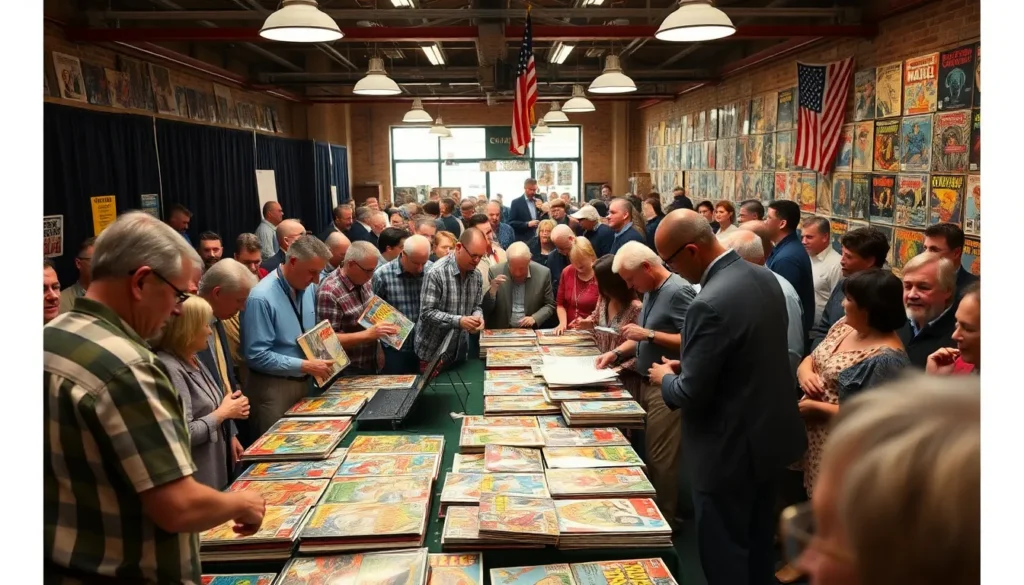
Comic book auctions come in various formats, catering to different preferences and needs among collectors and fans. Understanding these types enhances the overall auction experience.
Live Auctions
Live auctions take place in real-time, typically in a physical venue. Bidders can participate in person, adding excitement and immediacy to the experience. Major auction houses like Sotheby’s often host these events, showcasing high-value comics and attracting serious collectors. Participants engage in competitive bidding, and sometimes, a single comic can fetch thousands of dollars due to spirited competition. The atmosphere is vibrant, filled with anticipation and enthusiasm as collectors vie for prized items.
Online Auctions
Online auctions provide a convenient platform for buying and selling comics. Websites like Heritage Auctions and eBay facilitate these transactions, reaching a global audience. Bidders can participate from anywhere, opening up opportunities for casual fans and serious collectors alike. Auction duration typically ranges from a few days to weeks, allowing ample time for buyers to place bids. Online platforms often feature detailed listings with high-resolution images, enhancing the shopping experience. Flexibility is a key advantage, enabling collectors to browse and bid at their convenience, regardless of their location.
Key Players in Comic Book Auctions
Comic book auctions involve a variety of participants who play crucial roles in the process. These players include established auction houses and individual sellers, each contributing to the excitement and dynamics of bidding.
Auction Houses
Auction houses, such as Sotheby’s and Heritage Auctions, act as major facilitators in the comic book auction market. These organizations provide expert valuation and marketing services, attracting serious bidders. Often, they host both live and online events, catering to different audiences. Their established reputations build trust and enhance the auction experience for collectors. Offering a range of rare comics, auction houses also set record prices, drawing significant attention from the media and collectors alike. Experienced staff guide both buyers and sellers throughout the process, ensuring fair transactions and competitive bidding.
Individual Sellers
Individual sellers contribute uniquely to the comic book auction landscape. Often, they are passionate collectors looking to downsize or monetize parts of their collections. Sellers typically rely on auctions to connect with a broader audience, increasing the chances of selling rare issues. They set starting bids based on market trends, ensuring competitive pricing. Additionally, individual sellers provide variety and diversity to auction offerings. Each seller’s story adds context to their comics, enriching the overall experience for bidders. Engaging with the auction community, these individuals often seek advice and share insights, fostering connections within the collector’s sphere.
Tips for Buying at Comic Book Auctions
Buying at comic book auctions requires careful consideration and preparation. Participants enhance their chances of success through thorough research and effective bidding strategies.
Researching Comic Books
Knowledge of the specific comic books on auction is essential. Collectors must understand a comic’s value based on its rarity, condition, and demand. Tools like price guides and auction results help determine fair pricing. Familiarity with grading standards is crucial, as grading affects a comic’s value significantly. Identify the comic’s condition using standardized terminology, such as Near Mint or Fine. Engaging with online forums or expert communities can provide additional insights and perspectives, enhancing one’s understanding of trends in the market.
Bidding Strategies
Effective bidding strategies can make a significant difference in auction outcomes. Setting a budget prevents overspending and ensures a buyer remains within their financial limits. Bidders should also employ a bidding technique, such as jumping in early to signal serious intent or waiting until the last minute to place a bid. Monitoring the auction’s pace aids in assessing when to bid. It’s wise to avoid getting caught in bidding wars, as emotions can lead to inflated prices. Staying calm and focused enhances decision-making during high-pressure moments.
Conclusion
Comic book auctions represent a dynamic intersection of passion and commerce. They offer collectors a unique opportunity to acquire treasured items while engaging with a vibrant community. Whether participating in thrilling live events or convenient online platforms, bidders experience the excitement that comes with each auction.
As these auctions continue to evolve, they remain essential for both seasoned collectors and newcomers alike. The connections forged during these events enhance the overall enjoyment of collecting. With careful preparation and strategic bidding, anyone can navigate this exhilarating world and potentially walk away with a piece of comic book history.