
When it comes to first grade, reading isn’t just a skill—it’s an adventure waiting to unfold. Imagine a world where young readers embark on thrilling quests with brave characters, solve mysteries with clever detectives, and laugh along with quirky animals. This isn’t just about learning; it’s about igniting a passion for stories that stick with them for life.
A well-curated reading list can transform the classroom into a magical realm of imagination. It’s like giving kids a golden ticket to their favorite theme park, but instead of roller coasters, they’ll be riding the waves of creativity and curiosity. With the right books, first graders won’t just read—they’ll soar! So let’s dive into the must-have titles that will make reading as irresistible as a cookie jar on a rainy day.
1st Grade Reading List
Reading in first grade plays a crucial role in a child’s development. It enhances vocabulary, boosts comprehension skills, and fosters a sense of independence. Engaging with stories encourages imagination, sparking creativity that extends beyond the classroom.
Strong reading skills support various academic areas, laying a foundation for future learning. Studies show that children who read at grade level by the end of first grade are more likely to succeed in later grades. Exposure to diverse literature helps children understand different cultures and perspectives.
Participation in reading activities builds confidence, allowing children to express themselves more freely. Creating a routine that includes reading strengthens the bond between parents and children, promoting shared experiences.
The right book selection is essential to keep first graders interested. Titles that relate to students’ experiences often generate excitement and curiosity. Reading aloud and discussing stories enhance comprehension and enrich critical thinking skills.
Incorporating various genres introduces children to different writing styles while expanding their interests. Making reading fun encourages positive attitudes toward learning. Ultimately, providing access to an engaging reading list fuels a child’s desire to explore, comprehend, and enjoy the written word.
First Grade Reading List
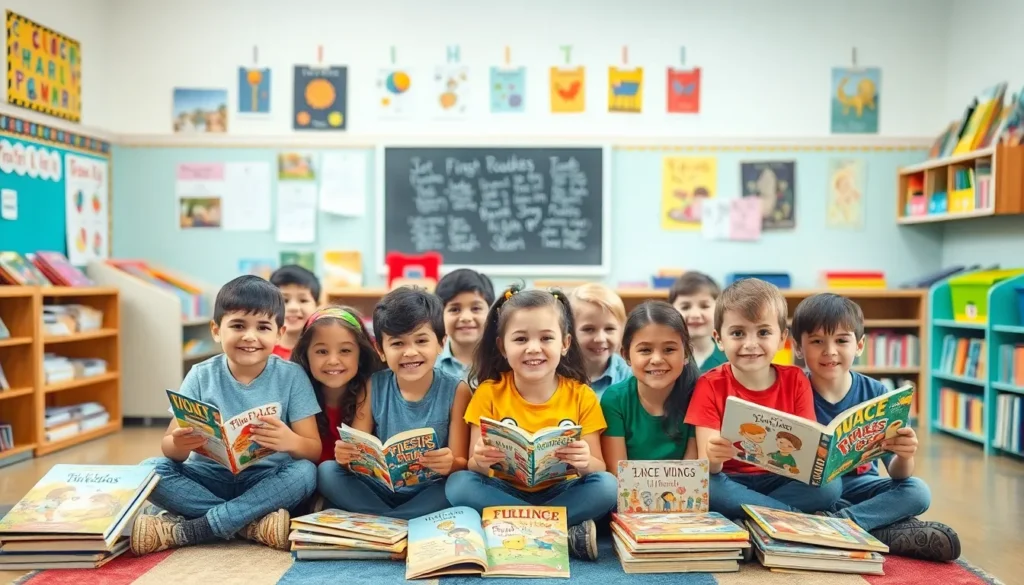
Selecting books for first graders enhances their reading experience and fosters a love for reading. Here are some engaging titles to consider.
Fiction Titles
Popular fiction titles grab the attention of young readers. “The Cat in the Hat” by Dr. Seuss introduces fun rhymes and playful characters. “Where the Wild Things Are” by Maurice Sendak takes children on a journey of imagination and adventure. “Don’t Let the Pigeon Drive the Bus!” by Mo Willems features humorous storytelling that encourages interaction. “The Snowy Day” by Ezra Jack Keats beautifully illustrates experiences of a child’s day in the snow. “Frog and Toad Are Friends” by Arnold Lobel tells simple yet meaningful tales of friendship. Each of these books captivates young minds through vibrant illustrations and relatable themes.
Non-Fiction Titles
Engaging non-fiction titles provide valuable learning experiences. **”National Geographic Little Kids First Big Book of Why” offers answers to children’s curious questions. “Our Planet” by the World Wildlife Fund showcases stunning images and information about nature. “The Magic of Reality” by Richard Dawkins explains scientific concepts in an accessible way. “I Am Malala: How One Girl Stood Up for Education and Changed the World” inspires young readers with real-life stories of courage. “Hello, World! Ocean Life” by Jill McDonald introduces ocean habitats and creatures. These non-fiction selections enrich first graders’ understanding of the world around them.
Tips For Encouraging Reading At Home
Encouraging reading at home lays the groundwork for developing a strong literacy foundation. Implementing effective strategies will nurture a child’s love for books.
Creating A Reading Routine
Establishing a consistent reading routine helps solidify reading habits. Schedule daily reading sessions, aiming for at least 20 minutes each day. Early morning or bedtime often works well for many families. Allowing children to choose their reading material fosters autonomy and engagement. Incorporating varied genres introduces new ideas, keeping interest piqued. Consistency builds familiarity, making reading a cherished part of daily life.
Selecting Age-Appropriate Books
Choosing age-appropriate books ensures material resonates with first graders. Look for titles that match their reading level, which typically includes simple vocabulary and relatable themes. Classic stories like “The Very Hungry Caterpillar” by Eric Carle capture young attention effectively. Non-fiction options like “National Geographic Little Kids First Big Book of Why” ignite curiosity about the world. Parents should also consider their child’s interests, whether it’s animals, adventures, or fantasy. Diversifying book selections fosters a deeper appreciation for literature and expands horizons.
Benefits Of A Diverse Reading List
A diverse reading list offers crucial benefits for first graders. Exposure to various cultures enhances children’s understanding of the world. Different genres spark interest and cater to various reading preferences. Engaging with diverse characters fosters empathy and encourages connection with stories.
Selecting books that reflect various perspectives helps young readers relate to characters and situations outside their experiences. Reading fiction and non-fiction broadens vocabulary and comprehension skills while encouraging critical thinking. Diverse themes keep young readers motivated and excited about learning.
Reading about different cultures introduces history, traditions, and global perspectives. Books like “Last Stop on Market Street” by Matt de la Peña illustrate socioeconomic differences, prompting important conversations. Engaging with these narratives stimulates curiosity and inspires exploration of new ideas.
Incorporating various genres and writing styles cultivates an appreciation for literature. Exposure to poetry, mysteries, and adventure stories can enhance creativity and imagination. Encouraging children to step outside their comfort zones promotes adaptability and strengthens their reading skills.
Families benefit from shared reading experiences that nurture connections. Discussions around different stories foster communication skills and deeper comprehension. Creating opportunities for family members to share favorite reads can enrich the reading experience for everyone involved.
Ultimately, a diverse reading list supports children’s emotional, social, and cognitive development, laying a strong foundation for future learning. Prioritizing diverse selections ensures an engaging reading environment, guiding young readers on their journey through literature.
Conclusion
First grade is a pivotal time for cultivating a love of reading. By providing a thoughtfully curated reading list, parents and educators can inspire young minds to explore new worlds and ideas. The right books not only engage children but also enhance their vocabulary and comprehension skills.
Encouraging a diverse selection of literature opens doors to different cultures and perspectives, fostering empathy and understanding. Regular reading routines and shared experiences further strengthen the bond between children and their caregivers. As children embark on their reading journey, the impact of these early choices will resonate throughout their academic lives and beyond. Creating a vibrant reading environment is essential for nurturing a lifelong passion for literature.