

In a world filled with flashy screens and high-tech gadgets, there’s something irresistibly charming about Little Golden Books. These vintage treasures, with their iconic gold foil spine, have been enchanting children and adults alike for generations. From whimsical tales of talking animals to heartwarming stories of friendship, these little books pack a big punch of nostalgia.
Overview of Little Golden Books Vintage
Little Golden Books, introduced in 1942, marked a revolution in children’s publishing. These charming books featured affordability, vibrant illustrations, and engaging stories. Collectors often seek vintage editions for their nostalgic value. Iconic titles like “The Poky Little Puppy” and “Goodnight Moon” captured the hearts of many generations.
The books’ distinct gold foil spines made them instantly recognizable on bookshelves. Distributed widely, Little Golden Books easily reached families across America. Their appeal extended beyond just children; parents cherished the tales read during bedtime.
Publishers frequently released new titles, ensuring a diverse selection for young readers. Stories cover various themes, from adventure and friendship to fantasy and everyday life. Each book maintains a simple yet captivating narrative style, making them accessible to early readers.
By the mid-20th century, Little Golden Books achieved significant market presence, selling millions of copies annually. Collectors appreciate the differing cover art and text variations in vintage editions. Some have become valuable artifacts, fetching high prices at auctions.
Notable illustrations by famous artists like Garth Williams and Eloise Wilkin added to the series’ charm. Their unique styles contributed to the emotional connection generations developed with these books. Preservation of vintage Little Golden Books reflects a commitment to preserving childhood memories.
History of Little Golden Books
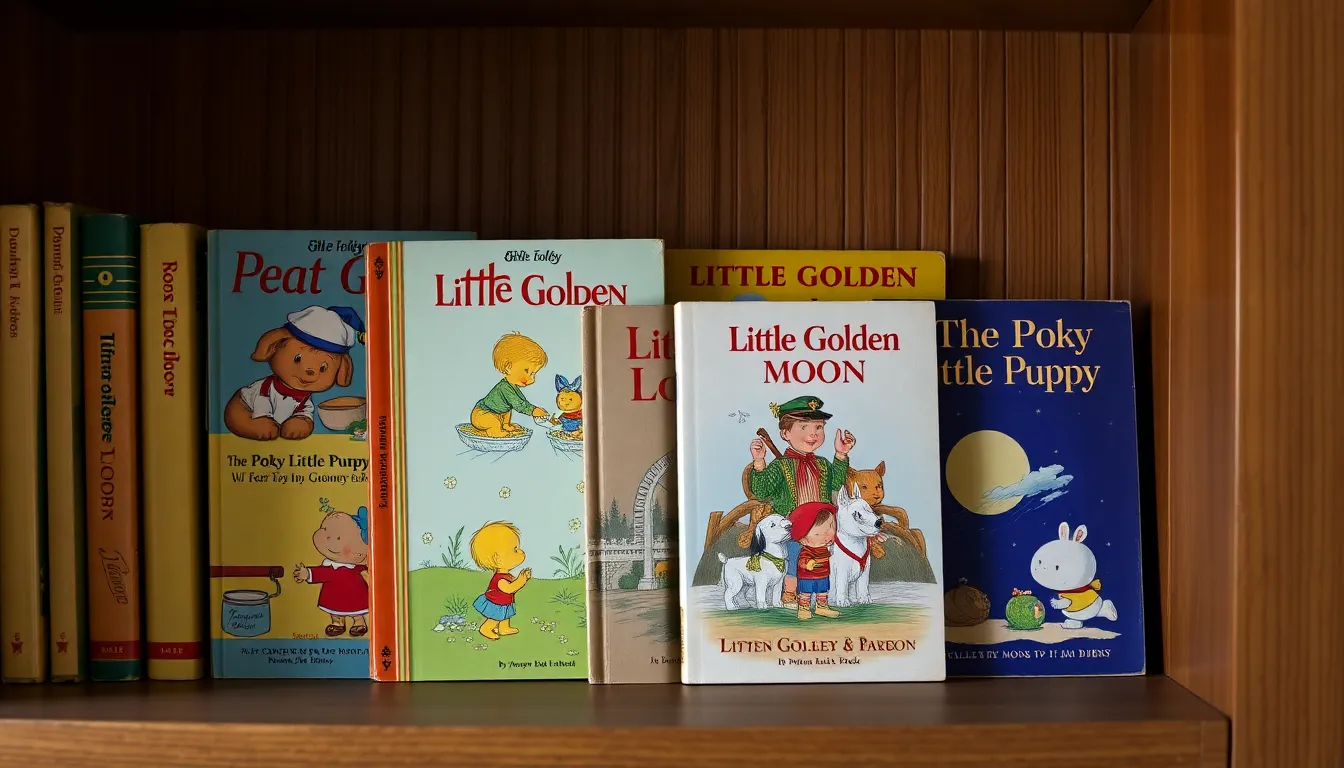
Little Golden Books emerged as a revolutionary force in children’s publishing. Their introduction in 1942 marked a significant shift in how stories were presented to young readers.
The Beginning of the Series
The Little Golden Books series began when Simon & Schuster partnered with artists and authors to create affordable, high-quality children’s books. The first twelve titles included “The Poky Little Puppy,” capturing attention with vibrant illustrations. Initially priced at 25 cents, these books appealed to a broad audience, making quality literature accessible to families across the nation. Their memorable gold foil spines provided a recognizable brand for young readers and collectors alike. The series quickly gained popularity, creating a lasting legacy in children’s literature.
Iconic Titles from the Past
Numerous titles from the early days of Little Golden Books remain beloved today. “Goodnight Moon,” a classic bedtime story, evokes comfort and familiarity for generations of readers. “The Velveteen Rabbit” explores themes of love and transformation, resonating deeply with children and adults. Other titles, including “Little Red Riding Hood” and “The Color Kittens,” contributed to the series’ widespread appeal. Collectors seek these vintage editions not only for their stories but also for the nostalgia they represent. Each of these iconic titles reinforces the series’ enduring charm and cultural significance.
Cultural Impact of Little Golden Books
Little Golden Books significantly shaped children’s literature and culture. Their affordability and captivating illustrations made reading accessible to many families.
Influence on Childhood Learning
Little Golden Books foster early literacy skills in young children. Engaging narratives promote vocabulary development, comprehension, and cognitive skills. Many titles incorporate themes of friendship, kindness, and creativity, offering valuable lessons for growth. Important stories often encourage children to explore emotions and understand the world around them. Illustrations by renowned artists enhance context and draw children into the storytelling experience. Over time, these factors collectively support a love for reading and learning that can last a lifetime.
Nostalgia and Collectibility
Collectors cherish vintage Little Golden Books for their nostalgic value. Many adults associate specific titles with their childhood memories, offering a sentimental connection to the past. Popular editions, such as “Goodnight Moon,” gain significant market interest, often fetching high prices. The iconic gold spines add to their desirability, making them instantly recognizable among collectors. As the years pass, the demand for vintage copies increases, with certain titles becoming real treasures. Enthusiasts often seek pristine conditions, further enhancing the cultural significance of these beloved books.
Collecting Little Golden Books Vintage
Collecting Little Golden Books vintage offers a delightful journey into nostalgia. Individuals cherish these books for their iconic illustrations and heartwarming stories.
How to Start Your Collection
Starting a collection of Little Golden Books requires focus and patience. Setting a budget helps streamline purchases and avoids overspending. Exploring local thrift stores can uncover hidden gems. Joining online forums connects collectors and provides valuable insights. Creating a checklist aids in tracking desired titles. Visiting estate sales often reveals unique finds. Acquiring duplicates can also be part of the strategy, as they may hold sentimental value or serve as trade material. Storing books properly protects their condition, ensuring they remain in excellent shape for years to come.
Tips for Finding Rare Editions
Finding rare editions of Little Golden Books demands creativity and persistence. Scouring online auction sites frequently yields rare titles. Networking with other collectors helps uncover leads on hard-to-find books. Attending book fairs creates opportunities to discover unique editions. Utilizing social media groups dedicated to vintage books also enhances the search. Checking out library sales can reveal vintage copies at lower prices. Patience pays off, as persistence often leads to discovering sought-after editions over time. Staying informed about market trends allows buyers to recognize value and make smart purchases.
Conclusion
Little Golden Books continue to hold a special place in the hearts of many. Their timeless stories and beautiful illustrations not only evoke cherished memories but also foster a love for reading in new generations. As collectors seek out vintage editions, the nostalgia surrounding these books only deepens.
The cultural significance of Little Golden Books is undeniable, as they bridge the gap between childhood and adulthood. Their impact on literacy and imagination remains strong, ensuring that these beloved stories will be treasured for years to come. Whether for personal enjoyment or as collectible artifacts, Little Golden Books are a testament to the enduring power of storytelling.