

Franz Kafka isn’t just a name that pops up in dusty literature classes; he’s the master of turning ordinary life into extraordinary existential dilemmas. Imagine waking up one day as a giant insect—sounds absurd, right? But for Kafka, that was just another Tuesday. His surreal tales invite readers to navigate the bizarre landscapes of bureaucracy, alienation, and the human condition with a mix of bewilderment and dark humor.
Overview of Franz Kafka
Franz Kafka, born on July 3, 1883, in Prague, became one of the most influential writers of the 20th century. He wrote in German and produced a distinct body of work, critically acclaimed for its exploration of complex themes. Kafka’s stories often reflect a sense of dislocation and anxiety, capturing the struggles of individuals within oppressive systems.
Notable works include “The Metamorphosis,” “The Trial,” and “The Castle.” Each of these narratives embodies Kafka’s characteristic surrealism, depicting protagonists caught in absurd and nightmarish circumstances. “The Trial” illustrates a man’s frustrated attempts to navigate a convoluted legal system. “The Castle” delves into the futility of seeking acceptance in an unapproachable bureaucracy.
Kafka’s narratives emphasize the feelings of alienation and despair. Alienation appears through characters often facing overwhelming, incomprehensible forces. Despair arises as they grapple with their hopeless situations, revealing the often-dark aspects of human existence. His use of absurdity juxtaposes humor with the bleak experiences of life, showcasing a unique storytelling style.
Although Kafka published only a handful of works during his lifetime, his posthumous reputation flourished. Literary scholars and critics have hailed him as a precursor to existentialism and surrealism, influencing countless writers and philosophers. Themes present in Kafka’s work remain relevant in contemporary discussions of human experience and societal structures.
Kafka’s life, marked by personal challenges and existential dread, contributed to his artistic vision. He passed away on June 3, 1924, leaving behind a legacy that continues to resonate. As readers engage with his texts, they encounter profound insights into the complexities of human existence.
Early Life and Influences
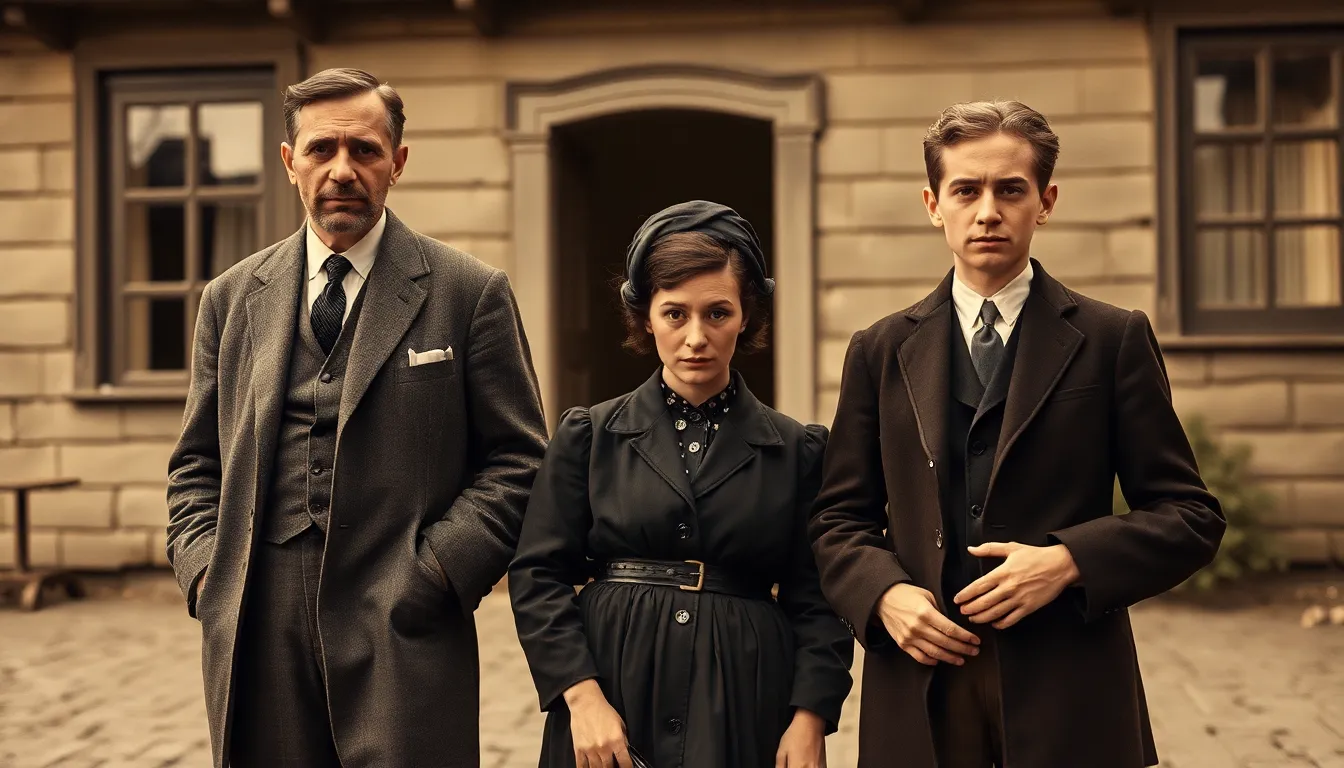
Franz Kafka’s early life and influences played a crucial role in shaping his literary voice. His experiences and background deeply informed his existential themes and unique narrative style.
Family Background
Franz Kafka was born into a middle-class Jewish family in Prague. His father, Hermann Kafka, owned a successful business, establishing a stable yet demanding environment. His mother, Julie Kafka, provided a nurturing presence, although the dynamics within the family were often strained. Kafka’s relationship with his father remained complex. This fraught connection significantly influenced his perception of authority and alienation, themes central to his writing. Cultural expectations within his family, particularly regarding education and career, also contributed to his struggles with identity.
Education
Education played a vital role in Kafka’s development as a writer. He attended the German School in Prague, where rigorous academic standards prevailed. Later, he studied law at Charles-Ferdinand University, earning a degree in 1906. Despite his legal education, Kafka never pursued a career in law, instead finding his passion in literature and writing. He engaged with philosophy and literature during his studies, encountering influential thinkers like Nietzsche and Schopenhauer, whose existential ideas resonated with him. Employing insights from his academic background, Kafka created profound narratives that examined the human condition, emphasizing absurdity and dislocation.
Major Works
Franz Kafka’s significant contributions to literature include several pivotal works that reflect his exploration of existential themes and human experiences.
The Metamorphosis
“The Metamorphosis,” published in 1915, remains Kafka’s most recognized work. It tells the story of Gregor Samsa, who inexplicably transforms into a giant insect. This transformation serves as a metaphor for alienation and the loss of identity. Characters struggle to comprehend Gregor’s condition, highlighting their inability to accept drastic changes. Familial ties deteriorate as the story unfolds, underscoring themes of isolation and despair. Kafka’s blend of absurdity and realism captivates readers, prompting reflections on the human experience.
The Trial
Kafka’s “The Trial,” released in 1925 posthumously, illustrates the plight of Josef K., who faces inexplicable legal charges without knowing the nature of his crime. The narrative delves into the complexities of bureaucracy and authority, showcasing the overwhelming and often arbitrary nature of legal systems. Characters embody the sense of helplessness, as K.’s attempts to navigate the labyrinth of justice lead to further entanglement. This work critiques the absurdity and futility of seeking resolution within oppressive institutions, resonating with themes of existential dread.
The Castle
Published in 1926, “The Castle” encapsulates Kafka’s exploration of alienation through its protagonist, K., who seeks approval from a distant authority. The castle represents an unattainable bureaucratic power, leading to K.’s relentless quest for acceptance. The narrative unfolds in a landscape filled with absurdity and confusion, reflecting the struggle against incomprehensible forces. Characters reinforce the themes of futility and existential anxiety as K. faces ongoing challenges. Kafka’s portrayal of isolation in “The Castle” resonates deeply, emphasizing the quest for purpose within an indifferent world.
Themes in Kafka’s Writing
Kafka’s writing profoundly examines the complexities of the human experience, delving into key themes like alienation, isolation, bureaucracy, and authority.
Alienation and Isolation
Alienation permeates Kafka’s narratives. Characters often find themselves estranged from society, grappling with their identities in a world that seems indifferent. In “The Metamorphosis,” Gregor Samsa’s transformation alienates him not only from his family but also from his own sense of self, mirroring the inner turmoil many individuals confront. Isolation is not merely physical; it’s emotional and psychological, highlighting the struggles of people amid societal pressures. Such experiences reflect Kafka’s profound understanding of the human condition, revealing how isolation can lead to despair and disconnection.
Bureaucracy and Authority
Bureaucracy serves as a crucial theme in Kafka’s work, representing the oppressive systems that govern human lives. In “The Trial,” Josef K.’s futile attempts to navigate a labyrinthine legal system illustrate the absurdity of power. Authority figures often remain faceless and indifferent, highlighting individuals’ powerlessness within bureaucratic structures. Characters grapple with incomprehensible regulations that thwart their efforts for justice and understanding. Kafka’s portrayal of authority critiques the dehumanizing effects of bureaucratic systems, showcasing how such structures can render individuals lost, powerless, and engulfed in anxiety.
Impact on Literature
Franz Kafka profoundly affected literature through his exploration of the human experience. His unique narrative style and thematic focus reshaped literary expression.
Influence on Modernism
Kafka’s work embodies key aspects of modernism, challenging traditional narrative forms and linear storytelling. Authors like James Joyce and Virginia Woolf drew inspiration from his techniques, particularly in stream of consciousness writing. Experimentation with structure and perspective became evident in many modernist texts. His exploration of absurdity and existential themes redefined how reality and isolation are portrayed, leading to a broader understanding of psychological depth. Works produced during this period frequently grapple with fragmented identities and the complexities of existence, showcasing Kafka’s lasting mark on literary innovation.
Legacy in Contemporary Writing
Contemporary writers still reflect on Kafka’s influence in their narratives. His portrayal of alienation resonates within modern literature, appearing in works by authors like David Foster Wallace and Haruki Murakami. Many contemporary texts highlight bureaucratic absurdities, mirroring Kafka’s critical eye toward societal systems. Themes of isolation and identity also persist, allowing readers to engage with characters facing dislocation and existential dread. Kafka’s signature blend of surrealism and dark humor maintains relevance, inspiring new generations of authors to explore life’s inherent uncertainties.
Conclusion
Franz Kafka’s legacy endures through his masterful exploration of the human condition. His ability to weave surreal narratives reflects deep existential questions that resonate across generations. Kafka’s characters navigate absurd realities that mirror the complexities of modern life, revealing the struggles of alienation and bureaucracy.
His influence on literature is profound, inspiring countless writers to delve into themes of isolation and absurdity. As contemporary authors continue to draw from his work, Kafka’s unique storytelling style remains a vital lens through which to examine the intricacies of existence. The impact of his narratives continues to challenge and provoke thought, ensuring that his voice remains relevant in today’s literary landscape.