In a world where the mundane often reigns supreme, mystery book authors craft tantalizing tales that whisk readers away into the unknown. These literary sleuths have a knack for weaving intricate plots, leaving clues like breadcrumbs for eager minds to follow. With every page turn, they challenge readers to unravel secrets and solve puzzles, all while keeping them on the edge of their seats.
From the classic whodunits of Agatha Christie to the modern twists of contemporary writers, mystery authors know how to tickle the brain and tease the imagination. They blend suspense with humor, creating a delightful cocktail that keeps readers guessing—and laughing. So, whether you’re a seasoned detective or a curious newcomer, dive into the captivating world of mystery authors and discover the stories that keep you guessing long after the last page is turned.
Mystery Book Authors
Mystery book authors craft narratives that pull readers into intriguing scenarios filled with secrets and enigmas. They shape plots that often revolve around crime, detective work, and unforeseen twists. These writers excel in building suspense, making every chapter a gripping experience.
Agatha Christie stands as a titan in the genre, known for her iconic works like “Murder on the Orient Express” and “And Then There Were None.” Her characters, including Hercule Poirot and Miss Marple, continue to influence modern writers.
Contemporary authors like Gillian Flynn and Tana French bring new perspectives to mystery literature. Flynn’s “Gone Girl” redefined psychological thrillers, while French’s intricate character development adds depth to the narrative.
Mystery authors often incorporate historical contexts, enhancing the richness of their stories. For example, writers like Arthur Conan Doyle and Raymond Chandler set their tales in distinct eras, grounding plots in social environments that reflect the times.
Diverse suspense categories exist within the genre. Cozy mysteries offer light-hearted investigations, whereas hard-boiled noir features morally ambiguous characters in gritty settings. Each style appeals to different preferences, highlighting the versatility of mystery writing.
Readers can appreciate both classic and contemporary authors. Engaging with their works allows exploration of various themes, motives, and resolutions. From solving crimes to revealing hidden truths, the world of mystery authors continues to evolve, captivating audiences globally.
Influential Mystery Book Authors
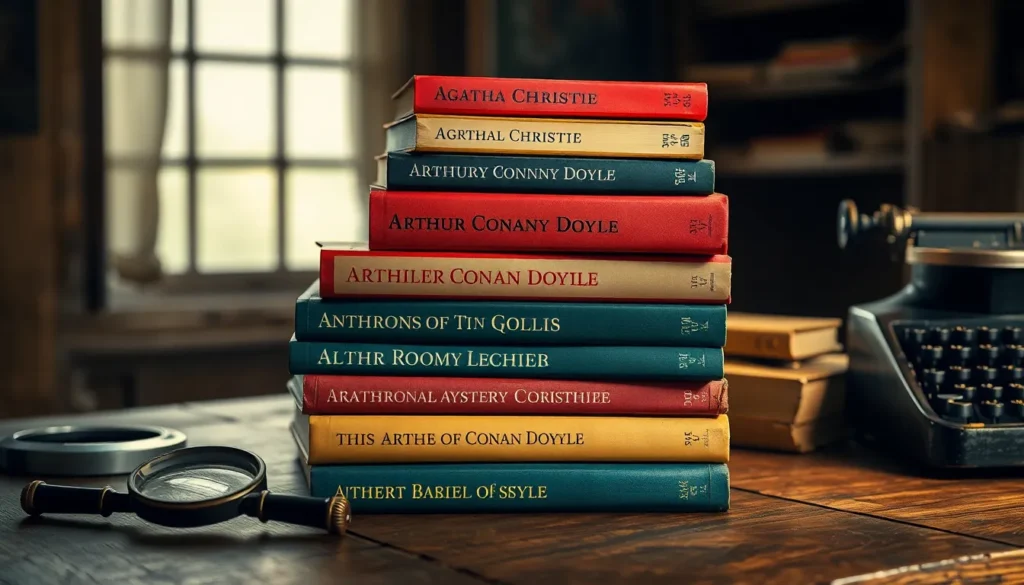
Mystery book authors have significantly shaped the genre through their unique narrative styles and compelling plots. Both classic and contemporary writers contribute to its rich tapestry.
Classic Authors
Agatha Christie remains a cornerstone of mystery literature. Her timeless works, including “Murder on the Orient Express” and “And Then There Were None,” feature iconic detectives Hercule Poirot and Miss Marple. Arthur Conan Doyle created Sherlock Holmes, redefining detective fiction and establishing a standard for logical deduction. Raymond Chandler’s hard-boiled style introduced gritty realism, paving the way for future noir works. Dashiell Hammett’s “The Maltese Falcon” exemplifies the genre’s blend of suspense and complex characters. Collectively, these authors crafted stories that laid the groundwork for future generations.
Contemporary Authors
Gillian Flynn’s “Gone Girl” reimagines psychological thrillers, emphasizing unreliable narratives and intense emotional conflicts. Tana French brings characters to life with nuanced psychological depth in her Dublin Murder Squad series. Other notable names include Harlan Coben, whose twisty plots keep readers guessing until the final page. Louise Penny’s Chief Inspector Armand Gamache series incorporates rich settings and intricate plots, appealing to fans of cozy mysteries. These contemporary writers reflect evolving reader expectations and continue to engage audiences with fresh perspectives.
Notable Works in Mystery Genre
The mystery genre features a plethora of remarkable titles that resonate with readers. Bestselling mystery novels often captivate audiences through gripping plots and unforgettable characters.
Bestselling Mystery Titles
“Gone Girl” by Gillian Flynn leads the pack, showcasing unreliable narration and psychological depth. “The Girl with the Dragon Tattoo” by Stieg Larsson also captivates through its intricate storyline and compelling protagonist. Another popular title, “Big Little Lies” by Liane Moriarty, blends domestic drama with thrilling twists. Agatha Christie’s “And Then There Were None” continues to engage readers with its classic whodunit elements. Furthermore, Louise Penny’s Chief Inspector Armand Gamache series appeals to fans of cozy mysteries, drawing readers into the scenic landscapes of Quebec.
Award-Winning Mysteries
Numerous award-winning mysteries stand out in literary circles. “The Cuckoo’s Calling,” written by Robert Galbraith (pseudonym for J.K. Rowling), received accolades for its detailed characterization and rich atmosphere. “The” Moonflower Murders” by Anthony Horowitz won the Specsavers National Book Award for best fiction. Tana French’s “In the Woods” garnered the Edgar Award, highlighting its intricate narrative and psychological depth. Also, “The No. 1 Ladies’ Detective Agency” by Alexander McCall Smith has won numerous awards for its charming storytelling. Each of these works exemplifies the outstanding craftsmanship present in contemporary mystery literature.
Emerging Voices in Mystery Literature
Readers encounter a vibrant array of new talent in mystery literature. Emerging authors draw inspiration from tradition while crafting unique narratives.
New Authors to Watch
A few standout names have begun to capture attention. Riley Sager gained recognition for his suspenseful thrillers like “Final Girls.” Another author, Dervla McTiernan, has won praise for her gripping Cormac Reilly series. Additionally, Alex Michaelides made waves with “The Silent Patient,” blending psychological depth with unexpected twists. Each of these authors brings fresh perspectives, enriching the genre.
Unique Styles and Approaches
Distinct styles define this new wave of writers. For instance, Sager infuses self-referential humor alongside chilling plots. McTiernan emphasizes atmospheric settings and complex character dilemmas, drawing readers into the emotional landscape. Michaelides expertly weaves unreliable narrators into his storytelling, maintaining suspense throughout. Collectively, these writers showcase an evolution in mystery literature while pushing traditional boundaries. Their innovative approaches beckon readers to explore captivating puzzles.